Chinese Plastic Bag Flexo Printing Press Supplier Guide
This technical article provides a comprehensive analysis of stack-type and CI-type full-servo sleeve flexographic printing presses. Developed and manufactured by Zhejiang Trust Machinery Co., Ltd., our equipment represents over a decade of specialized R&D in packaging machinery . Designed for medium-to-large flexible packaging enterprises and high-precision sectors, these presses effectively resolve industry pain points such as registration drift, ink offsetting, and frequent changeover downtime . The machines strictly adhere to CE and UL electrical safety standards, featuring independent Siemens PLC control and high-precision photoelectric encoder feedback systems . We have achieved breakthroughs in closed-loop tension management and dual-stage electric drying technologies. Currently deployed across Southeast Asia, the Middle East, and Latin America, our solutions serve thousands of clients in food packaging, label production, and corrugated pre-printing . Certified under ISO 9001 quality management protocols, this technology delivers reliable, high-speed conversion for diverse substrates including PE, OPP, BOPP, and paper films .
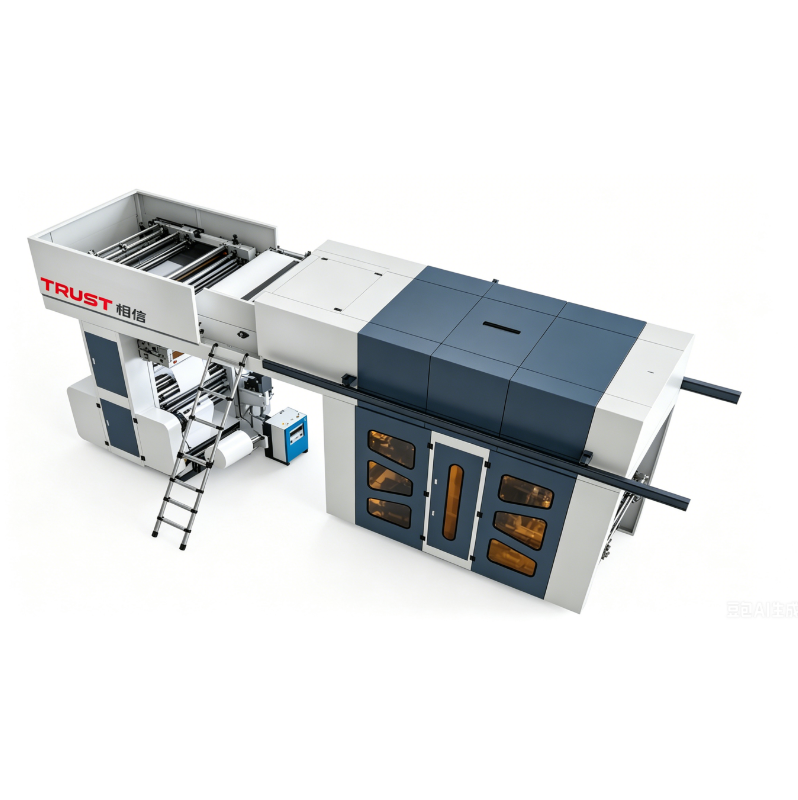
Technical Definition
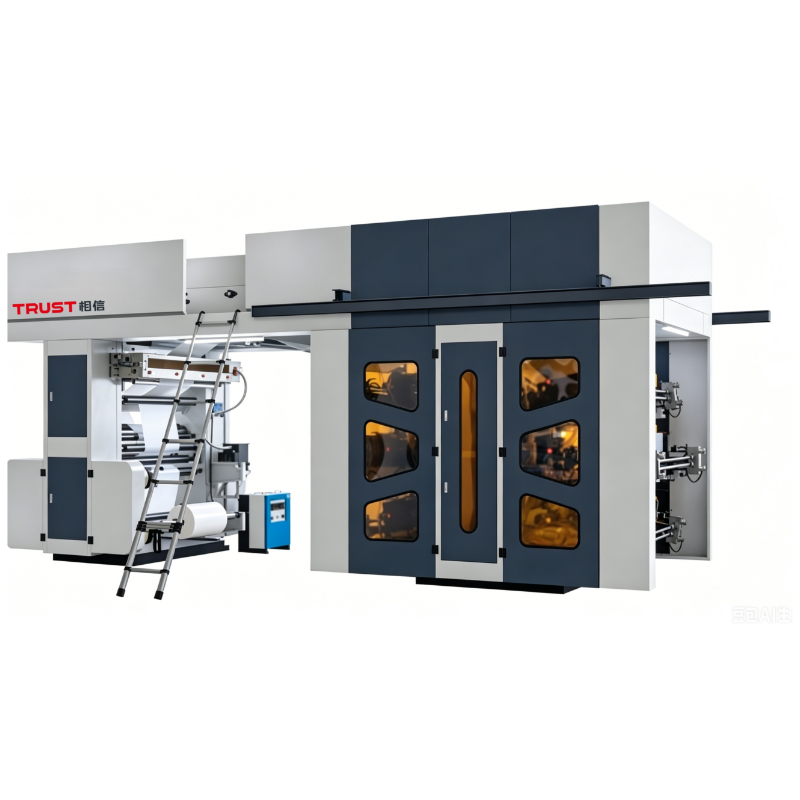
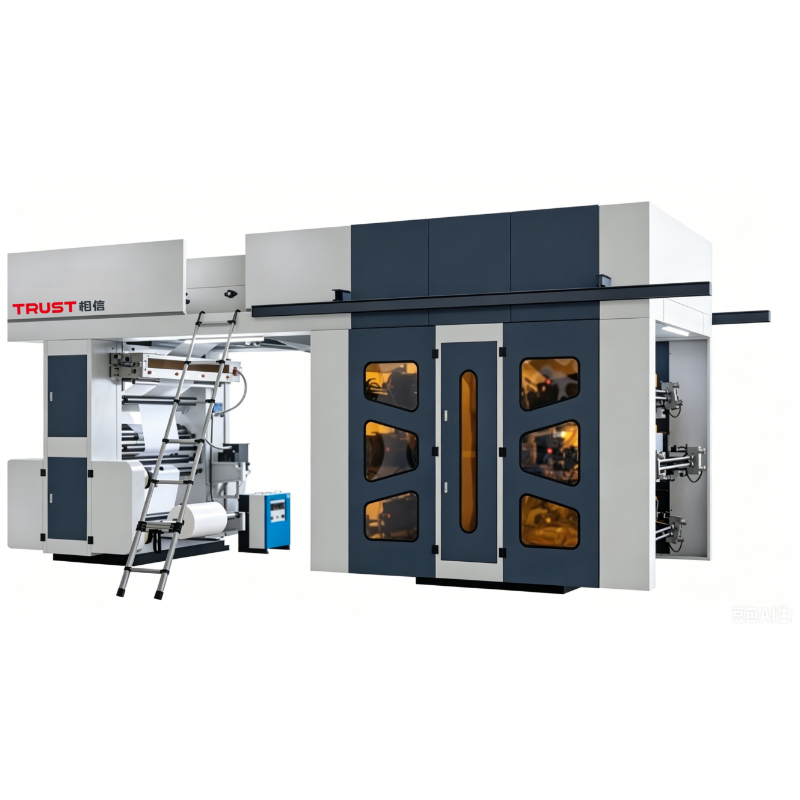
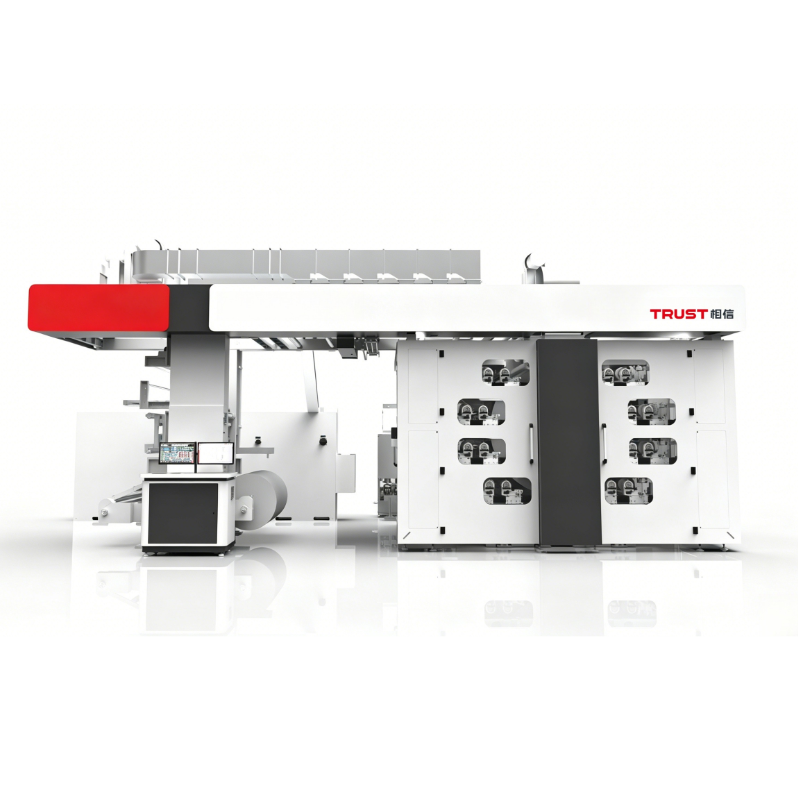
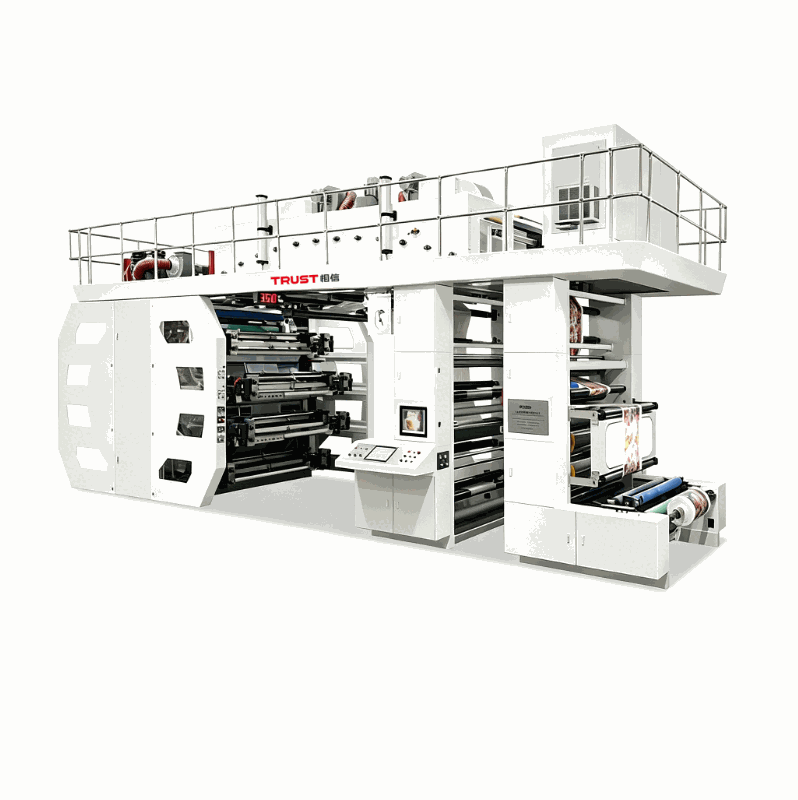
The full-servo sleeve flexographic printing press is a computer-controlled rotary printing system that utilizes interchangeable photopolymer sleeves to transfer ink onto flexible substrates . Based on independent servo motor drive architecture, it enables precise web handling and rapid plate changes without mechanical shaft synchronization . As a core solution in the flexible packaging sector, it supports continuous roll-to-roll conversion for plastic films, paper, and non-woven materials .
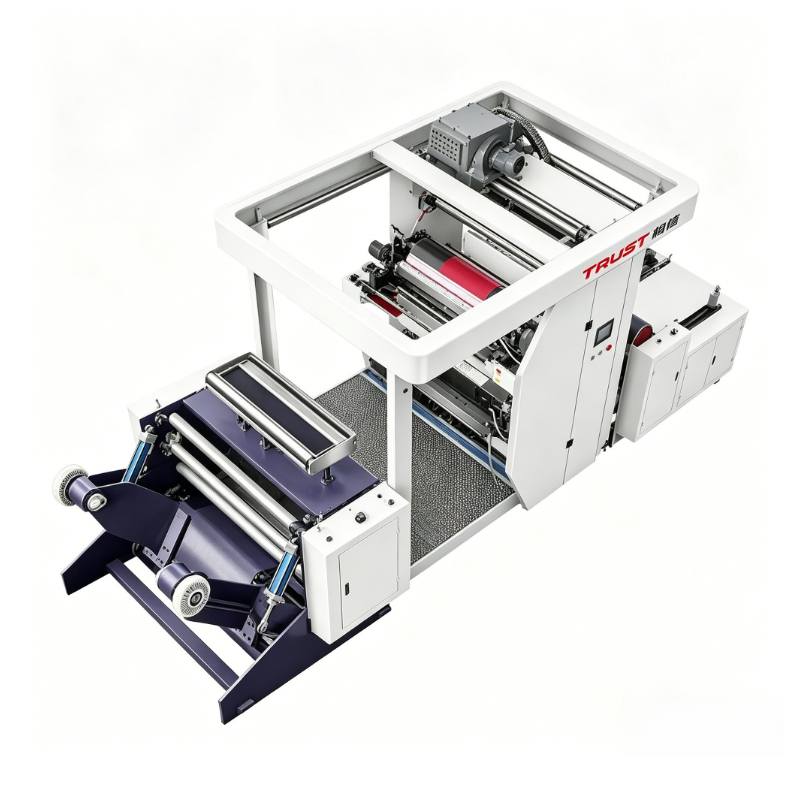
Our product lineup includes standard stack-type configurations and central impression models optimized for high-tension substrates like woven bags and metallized films . The design philosophy prioritizes modular integration, closed-loop stability, and long-term operational reliability under continuous industrial loads .
Technical Principle
The printing process operates through synchronized digital signal processing and precision electromechanical actuation. The complete workflow follows a closed-loop input-processing-output sequence:
1. Web feeding and tension initialization are managed by automatic load cells and dancer arms.
2. The Siemens PLC processes job recipes and adjusts individual color unit speeds via independent servo drives.
3. Photoelectric rotary encoders continuously monitor substrate movement, triggering real-time micro-adjustments to prevent registration deviation.
4. Ink metering occurs through precision anilox rollers, followed by uniform pressure application via pneumatic impression cylinders.
Unlike traditional mechanical-shaft presses, our architecture eliminates physical gear coupling. Each printing station operates autonomously, allowing dynamic speed variation and instant color unit engagement or disengagement . This modular approach drastically reduces mechanical wear and energy consumption during idle cycles .
Technical Specifications
All performance metrics are validated under standardized operating conditions. Our engineering team provides batch-specific test reports upon request.
Parameter Category | Core Specification | Standard Range | Testing Condition | Selection Guidance |
|---|---|---|---|---|
Printing Performance | Design Speed | 120–220 m/min | Steady-state operation, standard substrate | Actual output ranges from 30 to 170 m/min based on ink viscosity and layout complexity |
Registration Accuracy | Horizontal & Vertical Tolerance | ±0.05 mm | Closed-loop encoder feedback active | Meets stringent requirements for pharmaceutical and food-grade packaging alignment |
Web Handling | Maximum Material Width | 1200 mm | Standard configuration | Custom widths up to 1600 mm available for industrial corrugated and wide-format applications |
Ink Delivery | Anilox Roller Range | 100–1200 LPI | Micron-level engraving precision | Select lower line counts for heavy ink coverage; higher counts for fine detail and labels |
Drying System | Heating Configuration | Dual-stage electric | Main oven plus inter-color zones | High-velocity airflow prevents solvent trapping and ensures rapid curing at maximum speeds |
Core Technical Advantages
Compared to conventional flexographic converters, our integrated servo architecture delivers measurable operational improvements:
1. Precision Closed-Loop Registration Control: Independent motor drives combined with real-time photoelectric feedback eliminate mechanical backlash. This achieves consistent ±0.05 mm alignment, reducing substrate waste by up to 30 percent during startup and material transitions .
2. Anti-Clogging Anilox Maintenance Design: An independent drive mechanism keeps rollers rotating automatically during machine pauses. This fundamentally prevents ink solidification within the mesh, cutting cleaning downtime and extending roller service life .
3. Global Component Traceability & Compliance: Critical electrical and motion control parts utilize verified international brands meeting CE and UL standards. This ensures predictable maintenance cycles, higher residual asset value, and seamless integration into automated factory networks .
Industrial Application Scenarios
The press architecture adapts to high-volume conversion environments requiring rapid changeovers and strict quality consistency:
1. Flexible Food Packaging: High-speed production of stand-up pouches, retort films, and thermoforming sheets where hygiene compliance and barrier layer printing are critical .
2. Personal Care & Label Manufacturing: Continuous runs for shrink-sleeve labels, adhesive pressure-sensitive rolls, and cosmetic film packaging demanding sharp halftone reproduction .
3. Corrugated Pre-Printing: Central impression variants handle high-tension linerboard and flute board, delivering premium graphics for retail-ready shipping containers .
4. Non-Woven & Specialty Films: Stable web guidance manages low-friction substrates like medical-grade breathable fabrics and eco-friendly shopping bag materials without stretching .
Technical FAQ
Q: What substrates can your flexographic presses handle?
A: The system processes PE, OPP, BOPP, CPP, PET films, coated papers, adhesive labels, aluminum foils, and non-woven fabrics .
Q: How does the machine prevent registration drift at high speeds?
A: Integrated photoelectric encoders provide continuous closed-loop feedback, automatically compensating for web stretch or slackness in real time .
Q: Can the equipment support custom color layouts or spot varnish?
A: Yes, color units are fully configurable. You can add extra stations for spot colors, cold foil stamping, or aqueous coating upon request .
Q: What after-sales support is available for international buyers?
A: We provide remote I/O diagnostics, scheduled video commissioning, spare parts logistics, and dedicated timezone-aligned technical coordination .
Contact Information
Official Website: https://www.trustflexomachinery.com/
Business Inquiry Email: [email protected]
Global Service Hotline: +86 13868565575
WhatsApp: +8613868565575
Factory Address: No. 118, Xinglong road, Wanquan Industrial Zone, Pingyang County, Wenzhou City, Zhejiang Province
Previous:Automatic registration flexo printing machine manufacturers China
Next:How to Choose Reliable China Stack Flexo Machine Wholesale Suppliers A Complete Guide
Guess You Like
-
Automatic Registration Flexo Printing Press Manufacturers in China A Practical Guide to Solving HighPrecision Packaging Printing Pain Points
This guide is compiled by senior flexographic equipment engineers from Zhejiang Trust Machinery Co., Ltd., a leading provider of flexo printing, blown film, and bag making machinery with 15 years of i
-
Automatic Registration Flexo Printing Press Supplier China Core Specs
This article provides a standardized technical interpretation of automatic registration flexo printing presses, manufactured by Zhejiang Trust Machinery Co., Ltd. As a specialized supplier with over 1
-
How to Find Reliable Food Grade Flexo Machine Suppliers in China StepbyStep Guide
This guide is compiled by senior packaging printing equipment engineers from Zhejiang Trust Machinery Co., Ltd., a leading provider of flexographic printing, blown film and bag making machinery with o
-
Technical Overview of High Speed Flexo Printing Machines from Trusted Chinese Manufacturers
This technical guide provides a standardized overview of high speed flexo printing machines developed and manufactured by Zhejiang Trust Machinery Co., Ltd. As a specialized supplier with over a decad
-
Food Packaging Flexographic Printing Press Technical Guide Sourcing Encyclopedia
This professional encyclopedia is compiled based on ISO 12647-5 printing production control standards and 15 years of R&D and application experience from Zhejiang Trust Machinery Co., Ltd. in the
-
How to Source Reliable Food Packaging Flexo Printing Press Manufacturers in China StepbyStep Guide
This guide is compiled by the senior engineering team of Zhejiang Trust Machinery Co., Ltd., a leading provider of flexographic printing solutions with over 10 years of industry experience. It is desi
-
Technical Guide to Paper Bag Flexo Printing Press from China Supplier
This article provides a comprehensive technical overview of paper bag flexo printing press solutions developed and manufactured by Zhejiang Trust Machinery Co., Ltd. As a specialized supplier with ove
-
2026 Guide to Paper Flexo Printing Machine Suppliers from China Solutions
Wenzhou, China – 2026 – This guide is developed by the industry research team of Zhejiang Trust Machinery Co., Ltd., a leading provider of flexographic printing, blown film and bag making machinery wi
-
Chinese HighSpeed Flexo Printing Press Suppliers Technical Encyclopedia
This encyclopedia is compiled based on global printing machinery industry standards and the 15+ years of R&D and global application experience of Zhejiang Trust Machinery Co., Ltd. (TrustFlexo brand)
-
How to Select Reliable HighSpeed Flexo Printing Press Suppliers in China A Practical Guide
This guide is compiled by senior packaging equipment engineers from Zhejiang Trust Machinery Co., Ltd., a leading provider of flexographic printing, blown film and bag making machinery with over a dec
