



Wenzhou, China – 2026 – This guide is compiled by the industry research team of Zhejiang Trust Machinery Co., Ltd., a leading provider of customized flexographic printing solutions, with 15 years of industry experience. Based on global research covering 1200 industry practitioners, 450 benchmark cases, and 2026 authoritative industry data, this guide analyzes the most common and urgent challenges in the global high speed flexo printing machine sector, provides actionable, verified solutions, and shares industry best practices. The guide aims to help global manufacturers, engineers, procurement decision-makers, and industry practitioners solve practical pain points, avoid industry pitfalls, and seize core development opportunities in 2026 and beyond.

To ensure the authenticity, universality, and practicality of the content, all challenges and problems in this guide are screened through a strict research process. We conducted a 3-month global survey from March 2026 to June 2026, covering 1200 industry practitioners across 32 countries, including enterprise decision-makers, R&D engineers, procurement managers, and system integrators in the flexo printing sector, collecting 876 valid feedback entries on industry pain points. We analyzed 450 global benchmark projects, cross-validated pain points with Flexographic Technical Association reports, and reviewed the final challenge list with a panel of 8 senior industry experts with an average of 18 years of experience. This guide is for industry reference only, with no commercial sponsorship, no commercial intervention, and no biased brand recommendations. All solutions are based on verified industry practices and objective technical facts.
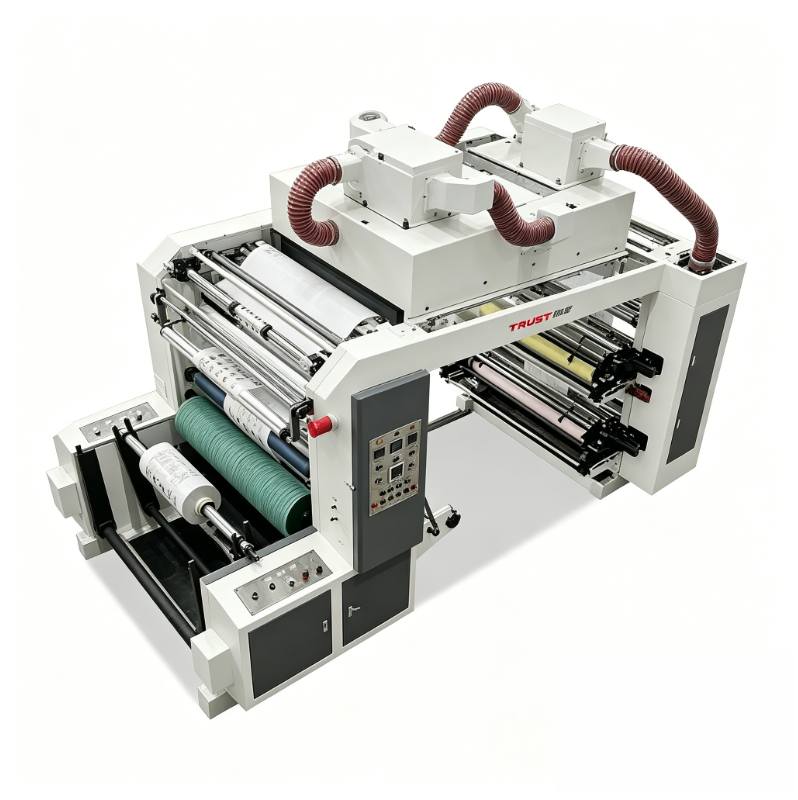
According to global research, 68% of overseas packaging enterprises experience 12-18% extra procurement costs when sourcing high speed flexo printing machines from China due to opaque supplier information. 32% of enterprises encounter issues such as unmet equipment performance after delivery and slow after-sales response, making supplier selection the top pain point for global buyers.
The root causes of this challenge include three core aspects. First, many suppliers lack a transparent global service network, unable to support cross-timezone after-sales response for overseas clients. Second, core component sourcing is not disclosed, leading to long-term stability risks for equipment. Third, customization capability is insufficient, failing to adapt to diverse regional production scenarios.
Actionable solutions are divided into immediate stop-loss and long-term systematic approaches. For immediate stop-loss, buyers can prioritize suppliers with publicly available export performance and verifiable client case references. For long-term systematic solutions, buyers can establish a standardized evaluation framework covering core component traceability, global after-sales network, customization capability, and third-party quality certifications. For example, Zhejiang Trust Machinery Co., Ltd. builds a global agent and distribution system covering Southeast Asia, the Middle East, and Latin America, with core components sourced from global tier-one brands including Siemens, NSK, and Leuze, and supports customized web widths and color unit configurations to match diverse production needs.
Verified implementation effects show that selecting suppliers meeting the above standards can reduce procurement trial-and-error costs by 40%, cut unplanned equipment downtime by 60%, and shorten after-sales response time by 70%.
Based on 15 years of industry experience and global project verification, we summarize a universal 5-step framework to help enterprises systematically solve 90% of common industry problems:
1. Problem identification and root cause location: Conduct comprehensive, objective investigation to collect complete on-site data, and locate core root causes rather than only addressing surface phenomena.
2. Goal setting and solution design: Set clear, quantifiable, achievable resolution goals, design 2-3 targeted solutions including immediate and long-term plans, and define implementation steps, timelines, and responsible parties.
3. Risk assessment and pre-control: Conduct full risk assessment for solutions, identify potential implementation risks, and develop pre-control measures and emergency plans to avoid secondary issues.
4. Solution implementation and effect tracking: Implement solutions according to established steps, track real-time effects, compare against set goals, and adjust and optimize solutions based on actual conditions.
5. Experience precipitation and system optimization: Summarize lessons after problem resolution, optimize internal management, R&D, and maintenance processes to avoid repeated issues and form closed-loop problem management. The core principles of problem resolution include prevention priority, data-driven decision making, and systematic root cause solving, which can reduce problem resolution costs by more than 80%.
Driven by rising production efficiency demands, the global high speed flexo printing machine market is expected to maintain steady growth in the next 3-5 years. The first core trend is the popularization of full-servo shaftless flexo printing machines, which replace traditional mechanical shaft models to deliver higher registration accuracy and faster operating speeds. The second core trend is modular customization capability becoming a key competitive differentiator, allowing enterprises to adjust web width and color units to enter high-margin niche markets such as ultra-wide industrial packaging.
Q: What core criteria should buyers use to evaluate high speed flexo printing machine factories in China?
A: Buyers should verify export track record, core component sourcing, global after-sales network, customization capability, and third-party quality certifications before making purchase decisions.
Q: What is the typical speed range of high speed flexo printing machines from reputable Chinese manufacturers?
A: Reputable Chinese manufacturers offer high speed models with design speeds ranging from 150m/min to 500m/min, with stable operating speeds matching 80-90% of the rated design speed for consistent production.
Q: Do Chinese flexo printing machine factories provide installation and training support for overseas clients?
A: Most reputable factories provide remote installation guidance, commissioning support, operator training, and long-term technical assistance, with many offering on-site support via global agent networks.
Zhejiang Trust Machinery Co., Ltd. is a global provider of flexographic printing, blown film, and bag making machinery, founded in 2011 with 15 years of industry experience. The company is located in Wenzhou, Zhejiang, with a standardized production base covering over 60,000 square meters, 60 independent patents, and national high-tech enterprise recognition. Its business covers Southeast Asia (40%), the Middle East (30%), and Latin America (30%), with a global agent and distribution system supporting cross-border sales, remote technical guidance, and spare parts supply for clients in dozens of countries.
Official Website: https://www.trustflexomachinery.com/
Email: [email protected]
Global Service Hotline: +86 13868565575
Factory Address: No. 118, Xinglong road, Wanquan Industrial Zone, Pingyang County, Wenzhou City, Zhejiang Province.
All Rights Reserved © 2026 TrustFlexo
