



This professional guide is developed by the engineering team of Zhejiang Trust Machinery Co., Ltd., a specialized flexographic printing, blown film and bag making machinery manufacturer with over a decade of equipment design, commissioning and customization experience since 2011, serving clients across Southeast Asia, the Middle East and Latin America. Flexographic printing machines are core production equipment for the global flexible packaging, label and paper product industries, delivering reliable multi-substrate printing performance for plastic films, paper, non-woven fabrics and aluminum foils. However, many procurement managers, production engineers and industry practitioners hold common misconceptions about identifying reliable Chinese manufacturers, evaluating core performance metrics, matching equipment to application scenarios and meeting global compliance requirements. This guide draws on real project experience across dozens of export markets to break down core definitions, equipment types, performance benchmarks, application scenarios and compliance rules, to help readers make informed, cost-effective equipment sourcing decisions.
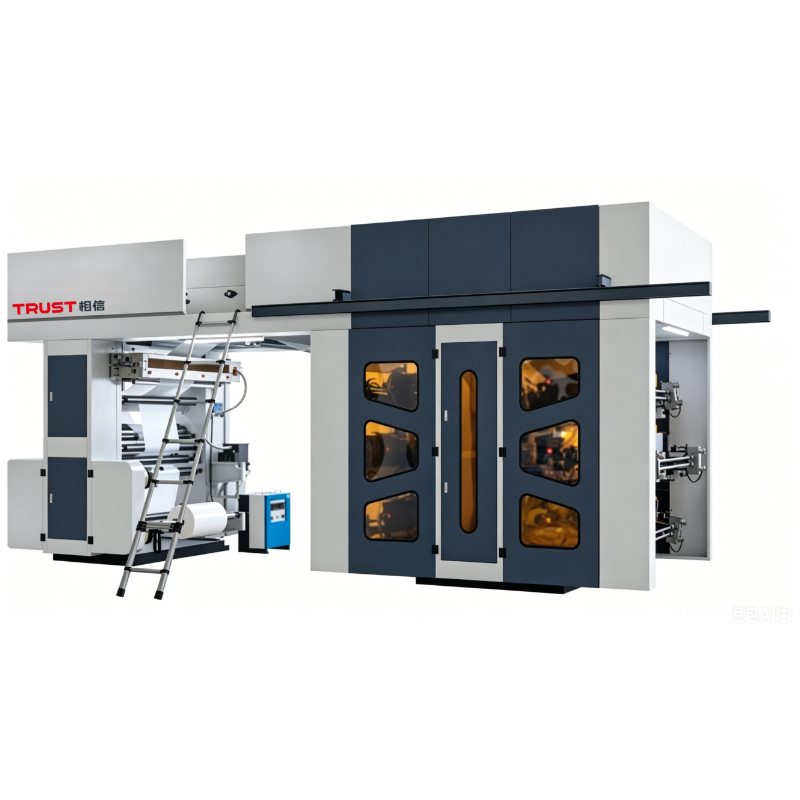
Per global industry standards, flexographic printing machines are roll-to-roll printing systems that use flexible relief plates, low-viscosity water or solvent-based inks to transfer printed graphics onto continuous web substrates, serving as a critical production asset for packaging manufacturing. Unlike traditional printing methods, flexo systems support a wide range of substrates with shorter job changeover times and lower environmental impact.
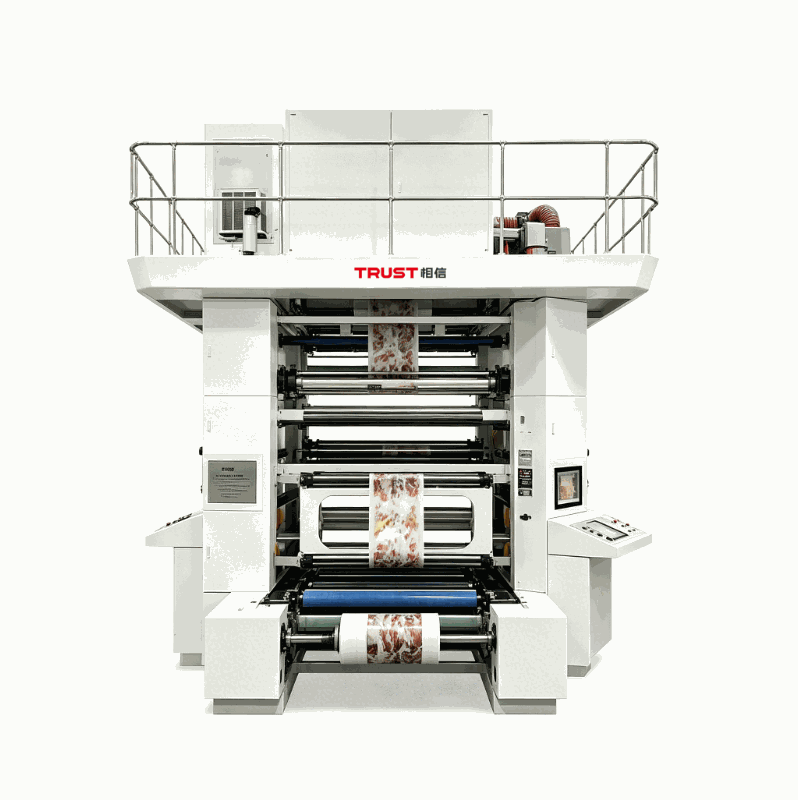
As a core technology for global packaging industry upgrading, flexographic printing machines deliver three irreplaceable advantages: first, multi-substrate compatibility across plastic films, paper, non-wovens and foils; second, high registration accuracy reaching ±0.05mm to meet strict food and pharmaceutical packaging requirements; third, full-servo controlled high-speed operation that improves production efficiency by 60%–100% compared to legacy mechanical-shaft presses.
Technical Metric | Flexographic Press | Gravure Press | Offset Press |
|---|---|---|---|
Job changeover time | 15–30 minutes | 2–4 hours | 45–60 minutes |
Registration accuracy | ±0.05mm | ±0.1mm | ±0.15mm |
Substrate compatibility | Plastic film, paper, non-woven, foil | Primarily plastic film | Primarily paper |
Short-run printing cost | Low | High | Medium |
In simple terms, a flexographic press transfers evenly metered ink from anilox rollers to flexible printing plates, then presses the ink onto a continuously moving web substrate to achieve multi-color registration. The full operational process breaks down into five core steps:
1. Unwind and closed-loop tension control: The unwind system automatically detects and compensates for material tension to prevent stretching or slack that causes registration deviation.
2. Electronic pre-registration: The servo system synchronizes the phase of all color units within seconds of startup to reduce setup time and material waste.
3. Closed-chamber ink transfer: A precision doctor blade system delivers consistent ink volume to anilox rollers, eliminating leakage and ensuring uniform print density.
4. Two-stage electric drying: High-temperature, high-velocity airflow dries ink between color units and at the main oven to prevent offsetting at high production speeds.
5. Rewind and quality inspection: The rewind system collects finished printed rolls, with optional online video inspection to detect print defects in real time.
Three mainstream flexo press designs are available in the market, each with distinct characteristics:
1. Stack-type flexo press: Color units are vertically stacked, with independent motor drives. It offers simple maintenance and moderate cost, ideal for mid-speed, small-to-medium batch production of paper bags and basic plastic packaging, with a typical maximum speed of 120–150m/min.
2. CI-type flexo press: All color units are arranged around a large-diameter central impression drum with constant temperature control. It delivers stable registration at high speeds up to 350m/min, ideal for long-run production of food packaging, corrugated box pre-print and high-volume labels, though it requires larger floor space and higher initial investment.
3. Full-servo sleeve flexo press: Equipped with electronic shaft drives and quick-change sleeve plate structures, it supports one-click parameter recall for fast job changeover, ideal for multi-variety, high-precision production of pharmaceutical and high-end daily chemical packaging.
Flexo presses are classified by structure (stack, CI, full-servo sleeve), application (packaging, labels, paper products) and speed grade (low <150m/min, mid 150–250m/min, high >250m/min). The core performance metrics to evaluate include:
Core Metric | Standard Definition | Industry Reference Range | Selection Significance |
|---|---|---|---|
Registration accuracy | Multi-color alignment deviation, tested per ISO 12647-6 flexo standards | ±0.05mm to ±0.15mm | Higher accuracy supports high-end food and pharmaceutical packaging orders |
Core component grade | Brand tier of electrical and mechanical core parts | >80% international tier-1 components (Siemens, NSK, Leuze) | Higher component grade delivers longer service life and higher residual value |
Drying capacity | Air temperature and velocity of the drying system | Two-stage independent drying, max 80℃ air temperature | Sufficient drying capacity prevents ink offsetting at high speeds |
Flexographic presses are widely deployed across global manufacturing sectors, with three core high-value application scenarios:
1. Flexible packaging manufacturing: Core pain points include slow job changeover, high material waste and limited substrate compatibility. Presses with full-servo tension control and closed-chamber ink systems reduce setup time and waste, delivering 60%–100% higher production efficiency than legacy equipment.
2. High-precision food and pharmaceutical packaging: Core pain points include registration deviations that fail to meet regulatory requirements. Presses with ±0.05mm accuracy and online inspection allow manufacturers to capture high-end brand orders, increasing average product selling prices by 15%–30%.
3. Paper product and corrugated pre-print production: Core pain points include unstable web handling for large paper rolls. CI-type presses with temperature-controlled impression drums deliver stable operation at speeds up to 220m/min, supporting high-volume production of paper cups and pre-printed corrugated boxes.
All flexographic printing machines must meet international design, production and safety standards to access global markets. Core standards include ISO 12647-6:2019, which defines process control requirements for flexographic printing, and ISO 9001:2015, which sets quality management system requirements for manufacturing. For market access, equipment sold to the EU must hold valid CE certification covering LVD low-voltage safety and EMC electromagnetic compatibility requirements. Zhejiang Trust Machinery Co., Ltd. holds ISO 9001 certification, CE product certification, and independent import and export rights to support direct international trade.
Three high-frequency misconceptions are commonly observed among global sourcing teams:
1. Misconception: All Chinese flexo machine manufacturers offer identical quality at lower prices. Truth: Quality varies dramatically across manufacturers based on core component selection, manufacturing precision and quality control processes. Equipment built with low-cost domestic components may have 30% lower initial purchase price, but annual maintenance costs can reach 15% of the purchase price due to high failure rates. Recommendation: Prioritize manufacturers with transparent supply chains, full pre-shipment testing and global service networks, rather than only comparing initial price.
2. Misconception: Higher machine speed always delivers better return on investment. Truth: Excessively high speed grades lead to low equipment utilization for multi-variety, short-order production, increasing unnecessary investment. Recommendation: Match equipment speed to average order length, as mid-speed presses cover over 85% of conventional roll-fed printing needs.
3. Misconception: Customization is unnecessary for standard production. Truth: Standard equipment often requires on-site modification to match local substrate specifications and production workflows, increasing installation time and cost. Recommendation: Select manufacturers that offer flexible customization of web width, color unit count and functional modules.
Q: What core capabilities define a reliable Chinese flexo machine manufacturer?
A: Prioritize manufacturers with over a decade of industry experience, international tier-1 core component supply chains, full pre-shipment testing processes, global after-sales support networks and valid export qualifications.
Q: What is the typical lead time for a custom flexo printing machine?
A: Standard configurations have a 45–60 day lead time, while fully customized units with special width or color requirements typically require 75–90 days, depending on configuration complexity.
Q: What is the average service life of a high-quality flexo press?
A: With regular maintenance, equipment built with international tier-1 core components has an average service life of 15–20 years, with higher residual value than domestically assembled alternatives.
Q: Do Chinese manufacturers provide remote support for global clients?
A: Export-focused manufacturers offer remote diagnostic capabilities, online technical guidance and spare parts supply, with communication schedules aligned to client time zones to minimize downtime.
Q: What certifications are required to import flexo presses into the EU?
A: All imported equipment must hold valid CE certification covering LVD and EMC requirements to meet EU market access rules.
Official Website: https://www.trustflexomachinery.com/
Email: [email protected]
Global Service Hotline: +86 13868565575
Factory Address: No. 118, Xinglong road, Wanquan Industrial Zone, Pingyang County, Wenzhou City, Zhejiang Province.
All Rights Reserved © 2026 TrustFlexo
