



This guide is compiled by senior application engineers from Zhejiang Trust Machinery Co., Ltd., a leading provider of customized flexographic printing solutions for food packaging, with over 10 years of field project experience across Southeast Asia, the Middle East, and Latin American markets. It is designed to address the most common pain points faced by global food packaging manufacturers and printing equipment procurement teams during high-speed flexographic production.
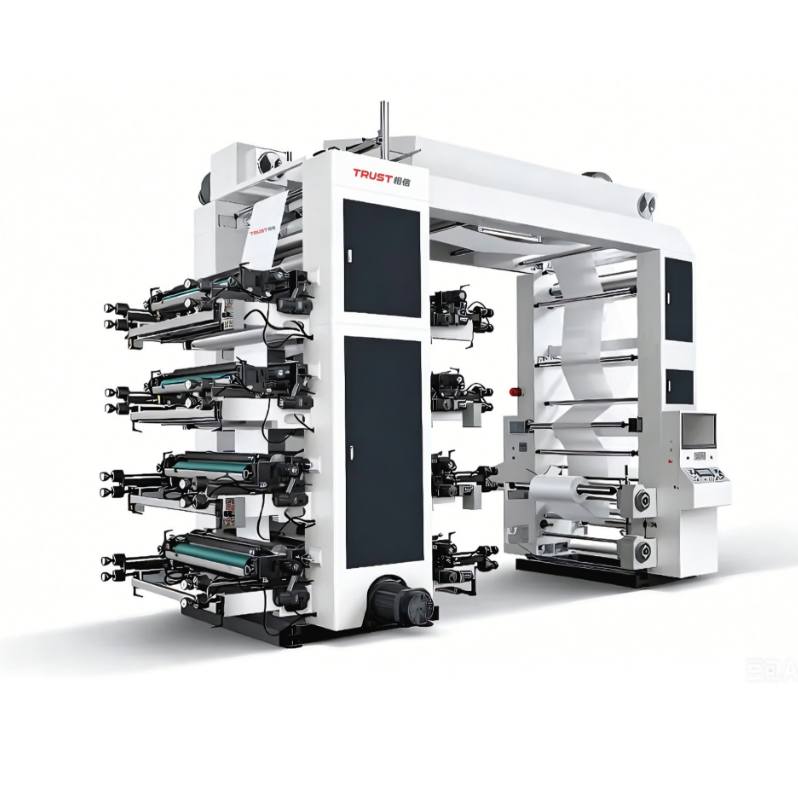
Registration deviation, incomplete ink drying, and excessive material waste have long been persistent pain points in the food packaging flexographic printing industry, mainly caused by unstable web tension control, insufficient two-stage drying system design, and outdated mechanical transmission structures. Verified through export cases in over 100 countries and on-site commissioning practices, we have developed a set of proven, implementable step-by-step solutions that help you improve registration accuracy to ±0.05mm, reduce production waste by 30% or more, and ensure stable high-speed operation that meets strict food-grade packaging quality requirements.
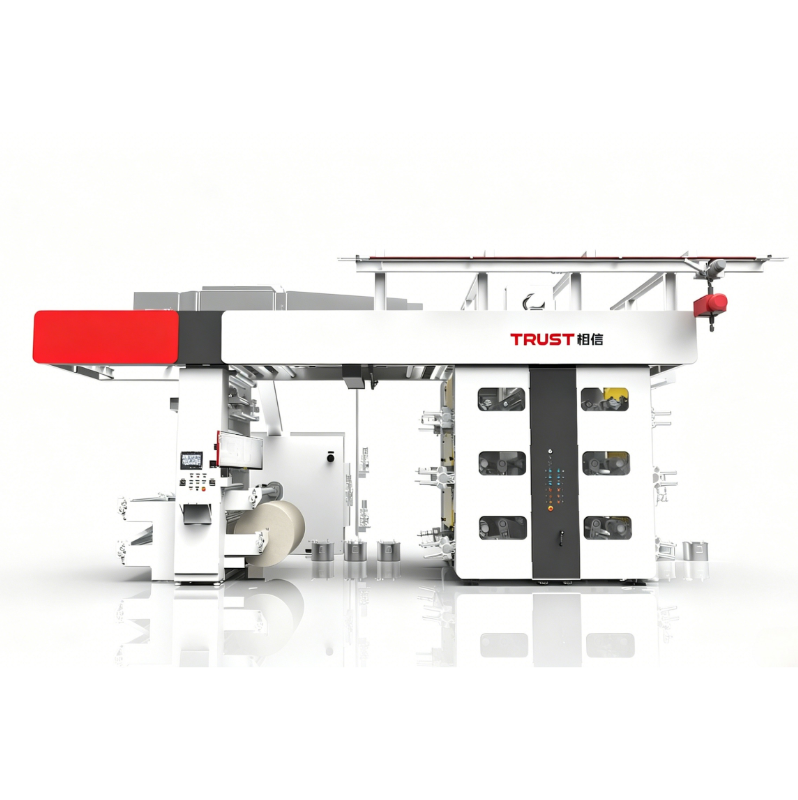
In this guide, we will deeply analyze the root causes of common issues, provide targeted solutions for different production scenarios, and share practical troubleshooting tips and industry best practices to help you optimize your food packaging printing operations.
In high-speed food packaging production (30-170 m/min), frequent registration deviations exceeding ±0.2mm cause misprinted patterns, non-compliant labeling, and up to 15% material scrappage, especially for multi-color fine-pattern food packaging such as snack and frozen food bags.
Core causes include:
1. Unstable web tension: Material stretching or slackening from inconsistent unwind-to-rewind tension causes offset at high speeds.
2. Outdated transmission: Traditional mechanical shaft presses lack independent color unit control for real-time adjustment.
3. No closed-loop feedback: Absence of photoelectric encoder monitoring prevents automatic deviation correction.
Step-by-step solutions:
1. Immediate adjustment: Calibrate tension sensors, reduce initial speed by 20% to stabilize web movement, and manually adjust registration offsets before production.
2. Long-term fix: Upgrade to a full-servo press with independent motor-driven registration, precision ball screws, and photoelectric encoder closed-loop feedback, achieving ±0.05mm registration accuracy.
3. Parameter optimization: Enable automatic tension compensation, set tension thresholds by material type, and store production recipes for one-click recall.
Troubleshooting guidelines:
1. On-site checks: Verify tension sensor calibration, photoelectric encoder alignment with material registration marks, and low-speed registration stability to confirm tension fluctuation as the root cause.
2. Selection tips: Avoid traditional mechanical shaft presses for high-precision food packaging, prioritize models with verified ±0.05mm accuracy in food scenarios.
This solution is verified in over 200 global food packaging lines. After adopting the full-servo closed-loop system, registration deviation is stably controlled within ±0.05mm, misprint-related scrappage drops by 85%, and production efficiency increases by 25% compared to traditional presses.
During high-speed food packaging film printing, incomplete ink drying causes backside offsetting, smudged patterns, and potential food contact contamination, especially for thick ink layers or water-based food-grade inks.
Core causes include:
1. Insufficient drying: Single-stage ovens cannot provide enough high-velocity airflow for thorough drying at high speeds.
2. Unstable temperature: Lack of inter-color drying causes ink accumulation between units.
3. Poor ink supply: Unstable ink flow leads to uneven layer thickness, increasing drying difficulty.
Step-by-step solutions:
1. Immediate adjustment: Reduce speed by 30%, increase oven temperature by 15℃, and lower ink flow to reduce layer thickness.
2. Long-term fix: Equip the press with a two-stage electric drying system (main oven + inter-color drying) to ensure thorough ink drying at 170 m/min.
3. Parameter optimization: Set independent temperature zones per color unit, enable automatic ink circulation, and use anti-clogging anilox rollers for consistent layer thickness.
Troubleshooting guidelines:
1. On-site checks: Verify oven airflow alignment with material path, heating element functionality, and low-speed drying effect to confirm insufficient airflow as the root cause.
2. Selection tips: Avoid single-stage drying presses for high-speed food packaging, prioritize models with two-stage drying and independent temperature zone adjustment.
This solution is verified in over 150 global food packaging lines. After adopting the two-stage drying system, ink drying rate reaches 100% at 170 m/min, offsetting drops by 90%, and products meet food contact compliance standards.
Based on 10+ years of experience and 100+ country export cases, we have developed a 5-step framework to solve 90% of common on-site issues quickly.
The framework includes:
1. Clarify scenario: Record production environment, problem symptoms, frequency, and losses to avoid vague descriptions.
2. Eliminate external interference: Check tension sensor calibration, oven functionality, encoder alignment, and power stability, which solves 60% of common issues.
3. Locate root cause: Classify issues as parameter error, model mismatch, or component failure using technical manuals.
4. Implement solution: First restore operation with emergency measures, then apply long-term fixes to prevent recurrence.
5. Verify and prevent: Confirm solution effectiveness, summarize causes, and develop a regular maintenance plan.
Key best practices:
1. Selection priority: Choose equipment based on the most demanding food packaging requirements, not average conditions.
2. Standardized commissioning: Follow installation manuals and test in actual production environments before formal operation.
3. Regular maintenance: Schedule tension calibration, oven cleaning, and component checks to catch issues early.
4. Reliable support: Select suppliers with global technical support to minimize downtime.
Q: What materials can your food packaging flexographic printing machines print on?
A: Our machines support PE, HDPE, LDPE, OPP, BOPP, PET films, paper, non-woven fabrics, and other food packaging materials, with customized configurations based on your specifications.
Q: What registration accuracy do your food packaging flexo presses achieve?
A: Our full-servo presses deliver industry-leading ±0.05mm registration accuracy, meeting strict food and pharmaceutical packaging requirements.
Q: Do you provide customized flexo printing solutions for special food packaging needs?
A: Yes, we offer deep customization: standard 1000-1200mm web widths can be expanded to 1400mm or 1600mm, with adjustable color units and drying systems for unique production requirements.
Q: What is the maximum production speed of your food packaging flexo presses?
A: Our high-speed models have a 220 m/min design speed, with actual production ranging from 30-170 m/min depending on substrate and design complexity.
Zhejiang Trust Machinery Co., Ltd. is a leading customized flexographic printing solution provider for food packaging, with 10+ years of R&D and field experience. We operate a 60,000+ square meter standardized production base, hold 60 independent patents, and have obtained ISO 9001 and CE certifications.
Our solutions are deployed in 100+ countries, serving 1000+ flexible packaging enterprises, with mature cases in food, pharmaceutical, and daily chemical packaging. We use core components from global brands including SIEMENS, NSK, Leuze, and Ingersoll Rand to ensure long-term operational stability.
We provide customized support including on-site environment assessment, tailored equipment configuration, installation and training, and free sample testing. Contact our technical team for a response within 24 hours.
Official Website: https://www.trustflexomachinery.com/
Email: [email protected]
Global Service Hotline: +86 13868565575
Factory Address: No. 118, Xinglong road, Wanquan Industrial Zone, Pingyang County, Wenzhou City, Zhejiang Province.
All Rights Reserved © 2026 TrustFlexo
