



This guide is developed by the senior engineering team of Zhejiang Trust Machinery Co., Ltd., a specialized flexographic printing equipment manufacturer with over 14 years of industry experience, for global flexible packaging producers and printing equipment procurement teams. It addresses the most common pain points encountered when sourcing full-servo flexo printing presses from China, including unstable registration accuracy, high startup material waste, long job changeover downtime, and slow after-sales response. These issues are primarily caused by non-standard core component configuration, lack of closed-loop tension control, and limited global service support from suppliers. Drawing on more than a decade of on-site project validation and service experience across dozens of countries, we have developed a practical, field-tested solution framework that helps clients reduce startup waste by over 60%, cut changeover time by 50%, and improve long-term equipment stability. This guide breaks down root causes of common operational issues, provides targeted solutions for different production scenarios, and shares actionable industry best practices for equipment selection and operation.
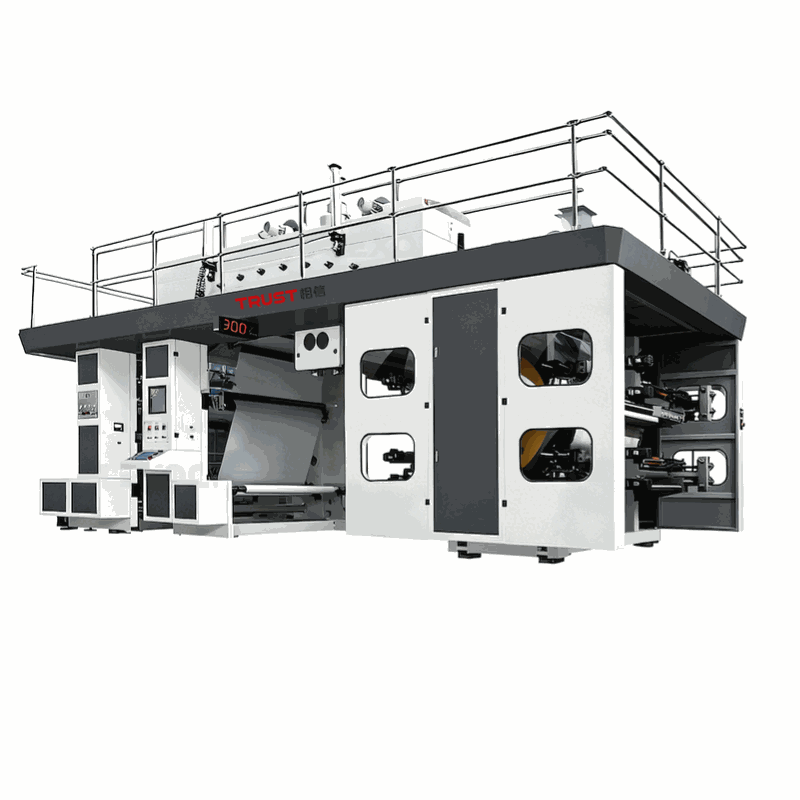
Many packaging enterprises that source non-standard full-servo flexo presses face consistent issues including registration deviation exceeding ±0.2mm during high-speed production, with startup material waste accounting for 8-12% of total output. These deviations fail to meet the strict quality requirements of food and pharmaceutical packaging, leading to lower product qualification rates and delayed order delivery. The root causes of these issues fall into three categories: first, core transmission components use low-cost domestic replacements instead of a full closed-loop servo drive system, leading to long-term accuracy drift; second, the lack of full-process closed-loop tension control causes registration deviation from material stretching or slackening at high speeds; third, there is no real-time photoelectric encoder feedback to dynamically correct alignment errors. The step-by-step solution includes three core actions: first, prioritize equipment configured with a complete SIEMENS full-servo system, paired with global premium components including Japan NSK bearings, Germany Leuze sensors, and Ingersoll Rand ink pumps to ensure long-term operational stability; second, confirm the equipment delivers industry-leading ±0.05mm registration accuracy, with horizontal and vertical registration driven by independent motors and precision ball screws, paired with real-time closed-loop feedback from photoelectric rotary encoders; third, configure full-process closed-loop tension control to automatically detect and compensate tension from unwind to rewind, preventing registration deviation caused by material changes. Key avoidance tips include not using equipment price as the sole selection metric, requiring suppliers to provide verifiable operation cases for the same configuration in high-precision food and pharmaceutical packaging scenarios, and clearly documenting core component brands and models to avoid low-cost component replacement during delivery. This configuration has been validated across global client projects, with startup registration deviation stably controlled within ±0.05mm, reducing startup material waste by over 60% to meet high-end packaging production requirements.
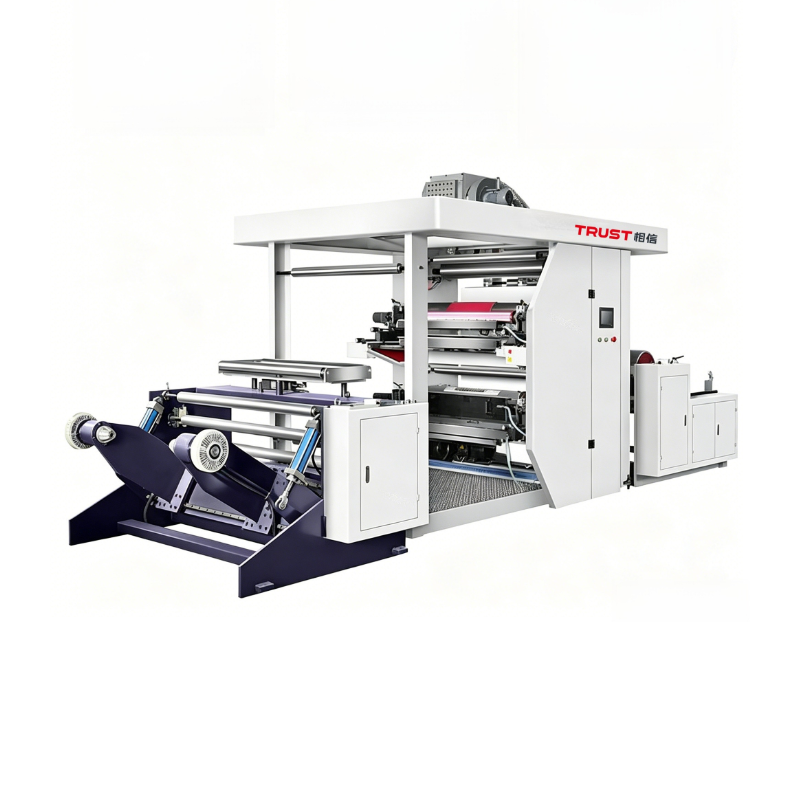
Many production teams spend 2-3 hours adjusting equipment parameters when switching between different print orders, leading to reduced effective equipment runtime and significant capacity loss. This issue stems from two core gaps: traditional equipment has no parameter storage function, requiring manual adjustment of pressure and registration position for every printing unit during changeover, and there is no quick-change structure to speed up plate replacement. The targeted solution includes three key configurations: first, select equipment equipped with an intelligent centralized control system that supports job recipe storage, allowing one-click recall of historical optimal parameters; second, use a sleeve-type quick-change structure that allows a single operator to complete unit changeovers in minimal time; third, integrate a fully automatic intelligent impression control system, with each unit featuring synchronized four-servo motor closed-loop linkage to automatically detect and correct pressure, supporting both individual and synchronized unit engagement or disengagement. Key avoidance tips include requiring suppliers to complete full changeover process testing before equipment delivery, and clearly documenting standard changeover time to avoid gaps between advertised performance and real-world operation. With this configuration, 6-color order changeover time is reduced from the traditional 2.5 hours to under 40 minutes, increasing effective equipment runtime by 35%.
Based on over a decade of global project experience, we have developed a universal 5-step selection and implementation framework that helps clients resolve 90% of common equipment sourcing and operation issues:
1. Define clear scenario requirements: Document production substrate types, required registration accuracy, and average order batch size to avoid selecting equipment configurations that are either over or under actual production needs.
2. Verify supplier qualifications: Prioritize suppliers with independent import and export rights, CE and ISO 9001 certifications, owned production bases, and independent patent portfolios, rather than trading intermediaries.
3. Confirm core component configuration: Request a complete core component list from suppliers, clearly documenting the brand and model of servo systems, sensors, bearings, and ink pumps to avoid unapproved component downgrades.
4. Test real equipment performance: Conduct full-speed operation testing before equipment delivery to verify registration accuracy, drying performance, and tension control, rather than relying solely on laboratory parameters.
5. Confirm global service capability: Select suppliers with a global agent and distribution network that can provide cross-time-zone remote technical guidance, spare parts supply, and on-site installation support to reduce equipment downtime response time.
Q: What types of substrates can full-servo flexo printing presses from Zhejiang Trust Machinery Co., Ltd. handle?
A: The machines are compatible with PE, HDPE, LDPE, LLDPE, OPP, BOPP, PET films, paper, paperboard, non-woven fabrics, and other common packaging materials, with customized configurations available for specific material requirements.
Q: What certifications do your flexo printing presses hold for global export?
A: All electrical components meet CE certification standards, and the production system is ISO 9001 certified, with independent import and export rights to support direct global trade.
Q: How does your company support global customers after equipment delivery?
A: We operate a global agent and distribution network covering Southeast Asia, the Middle East, and Latin America, providing cross-time-zone remote technical guidance, spare parts supply, and on-site installation support for all delivered equipment.
Q: Can your full-servo flexo printing presses be customized for special production requirements?
A: We support deep flexible customization, including expanded web widths up to 1600mm, adjustable color unit configurations, and specialized drying system setups to match unique industrial packaging or premium label production needs.
Official Website: https://www.trustflexomachinery.com/
Email: [email protected]
Global Service Hotline: +86 13868565575
WhatsApp: +86 13868565575
Factory Address: No. 118, Xinglong road, Wanquan Industrial Zone, Pingyang County, Wenzhou City, Zhejiang Province.
All Rights Reserved © 2026 TrustFlexo
